Damp: three causes, three treatments
A dark stain at the foot of a wall, blistering, a plaster coat coming away: the symptoms look alike, the causes almost never do. There are three of them, and mistaking one for another guarantees that the problem comes back.
Penetrating damp comes from outside: a crack in the façade, a dead seal around a window, a terrace whose waterproofing has aged, a blocked rainwater downpipe. You recognise it because it follows the rain. It is treated outside; no amount of internal paint will change it.
Condensation comes from inside: steam produced by the kitchen, the shower, the washing, settling on the cold surfaces — corners, window reveals, a wall backing onto an unheated space. You recognise it because it appears in winter and in the corners. It is treated by ventilation and by dealing with the cold bridges.
Rising damp comes from the ground and climbs the wall through its pores. You recognise it by its sharp horizontal line and by the salts that come with it. It is the heaviest to treat, and the only one that a decorator's visit will not settle.
We test, we identify which of the three is at work, and we tell you before pricing. Paint applied to a wall whose cause has not been treated is money laid over an untouched problem.
The surface makes the finish, the paint only makes the colour
On a finished wall you do not see the paint: you see the light it gives back. And what the light reveals is the surface underneath — a bump, a filled patch badly sanded, the mark of a blade, the difference in absorption between new and old plaster.
So the preparation always follows the same order: test and strip back what does not hold, fill, skim, sand, remove the dust, apply a primer that evens out the absorption, then paint. Each of those stages shows in the result, and none of them can be made up for by the next coat.
Two cases call for particular attention in period Nice buildings. Lath-and-plaster ceilings, which have to be tested before they are touched: whatever sounds hollow will come away sooner or later. And the old paints in buildings put up before 1949, which may contain lead: stripping them then calls for particular precautions, which are allowed for in the quotation and not on the morning of the job.
A suspended ceiling settles three problems at once
A suspended ceiling on a metal frame is not a decorative device: it is often the cheapest answer to three problems that would otherwise be tackled one by one.
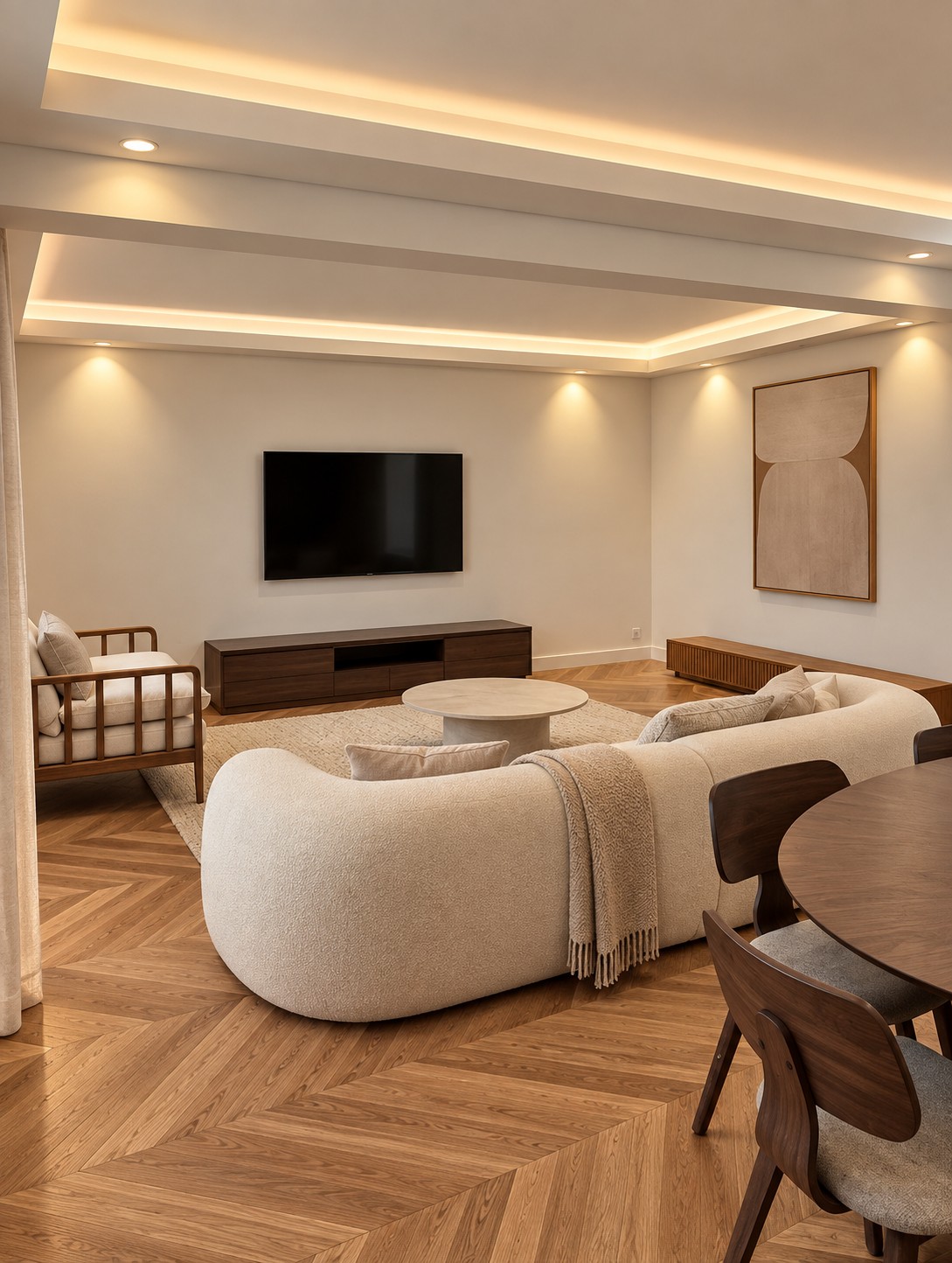
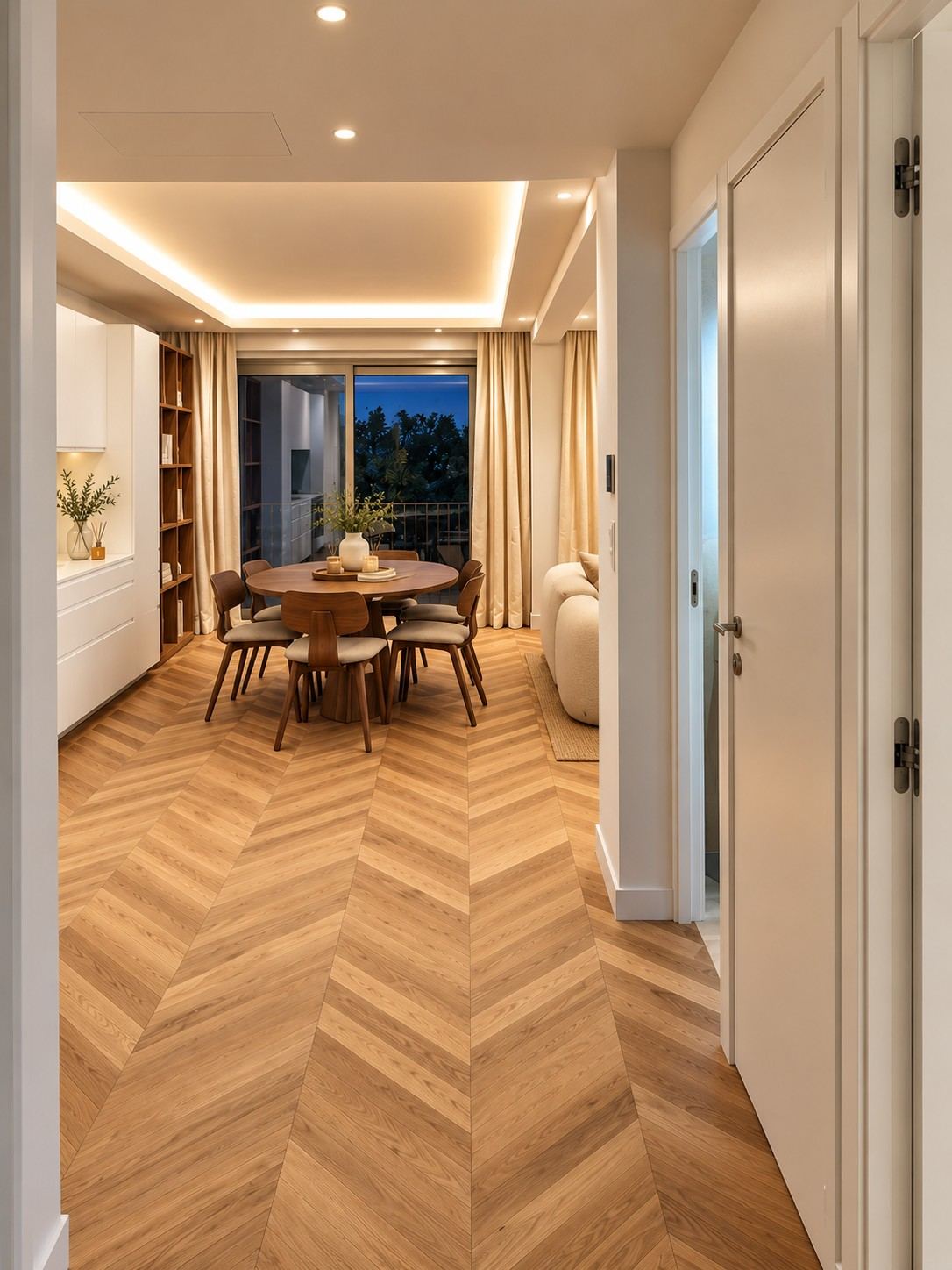
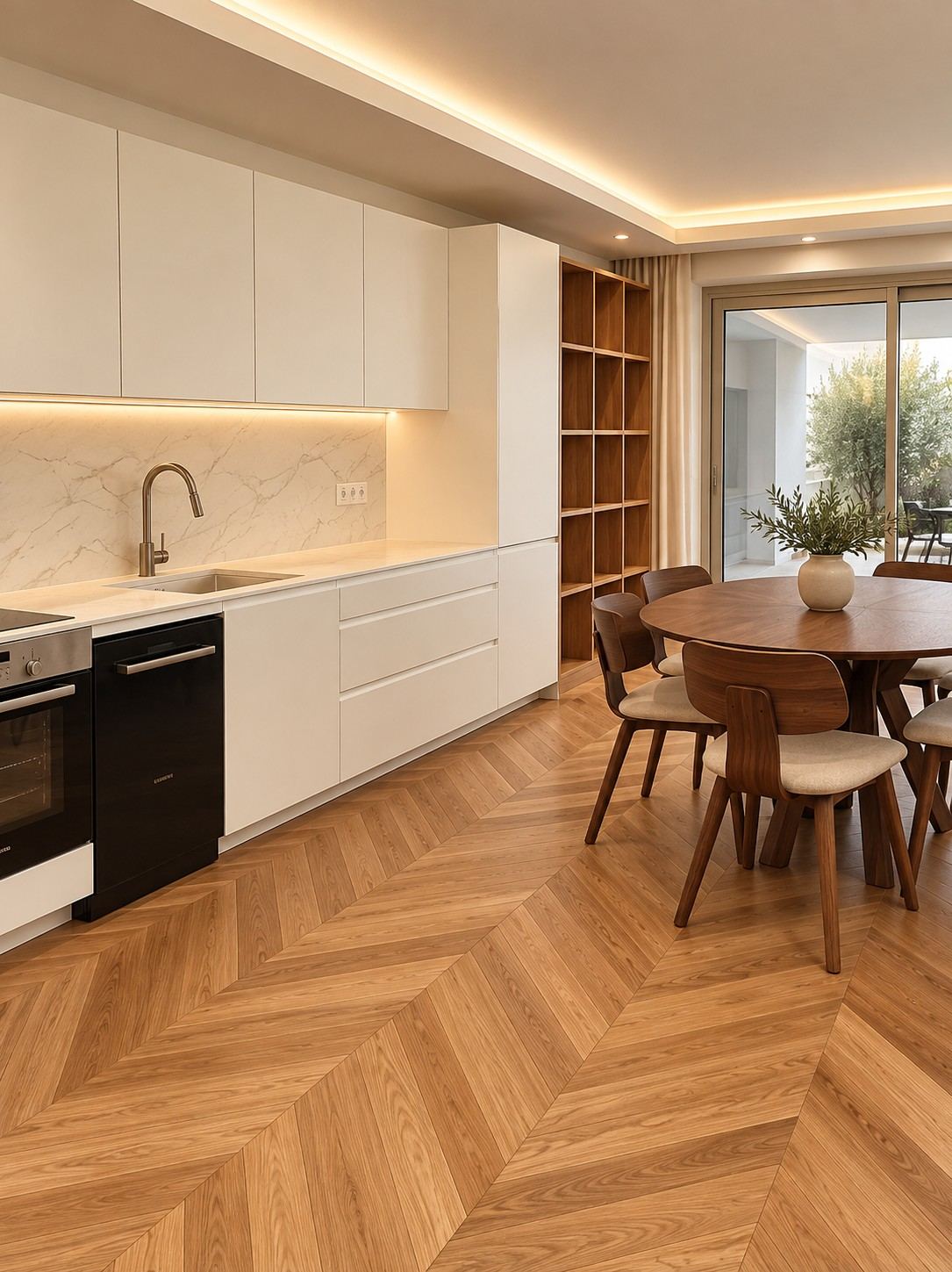
It hides the services — conduits, cables, ventilation ducts, exposed pipework — with no chases and without touching the structure. It corrects a level that no plaster coat could correct: an old ceiling that undulates by several centimetres is brought back true by adjusting the frame, not by loading it with plaster. And it builds the lighting in: recessed spotlights, cove lighting, indirect strips, with the void needed above them.
It has a price: ceiling height. A few centimetres at best, more if a duct has to be housed. In a period building with generous height it goes unnoticed; in a 1970s residence it is a real decision, and we give you the finished height before you decide.
Matt, satin, soft sheen: what each one forgives
The choice of finish is not only a matter of taste, it is a matter of how much scrutiny the wall can take.
Matt absorbs the light and erases defects: it is what goes on ceilings and on the large walls of a period home, because it does not draw the irregularities. It cleans badly, which makes it a poor choice in a hallway or behind a worktop.
Satin gives the light back and washes: kitchen, bathroom, woodwork, door frames, commercial premises. In return it underlines everything imperfect in the surface, so it calls for more thorough preparation — which, for the same area, costs more in preparation than in paint.
Soft sheen holds the middle ground: washable without being shiny. It is the sensible compromise for living rooms and children's bedrooms.
And the light in Nice is hard on colour: an off-white that looks neutral on the chart turns yellow facing south, and a muted colour goes grey in a north-facing room. We put the samples up on site, on the wall itself, and you look at them at two different times of day before choosing.