Plumbing and electrics in a Nice renovation: what the building dictates
Belle Époque and Haussmann-style buildings. Carré d'Or, the Musiciens quarter, Cimiez, Libération: the services are often as old as the building. Lead or steel supply pipes, cast-iron drains connected to a shared stack, circuits with no earth, a fuse board. The floors are timber: the services run within their depth, respecting the joists, with no heavy screed. Touching the stack means touching the common parts: we prepare the file for the building manager.
Residences of the 1960s and 1970s. In Fabron, Magnan, Saint-Roch, Riquier and Saint-Augustin, the services are buried in concrete slabs: crushed conduits, furred-up risers, partial earthing. New distribution most often runs in the ceiling or behind a lining, which is decided together with the partitions and false ceilings, not afterwards.
Houses and villas. On the hills of Nice, in Villefranche-sur-Mer, Beaulieu, Cagnes-sur-Mer or Antibes, distances count: buried services, crawl space, a consumer unit to resize when the house grows. The power available at the meter is checked at the first visit.
Electrical compliance: what we check and redo
The consumer unit. 30 mA residual-current devices, breakers rated circuit by circuit, spare ways for the future. In an older home, this is where it starts.
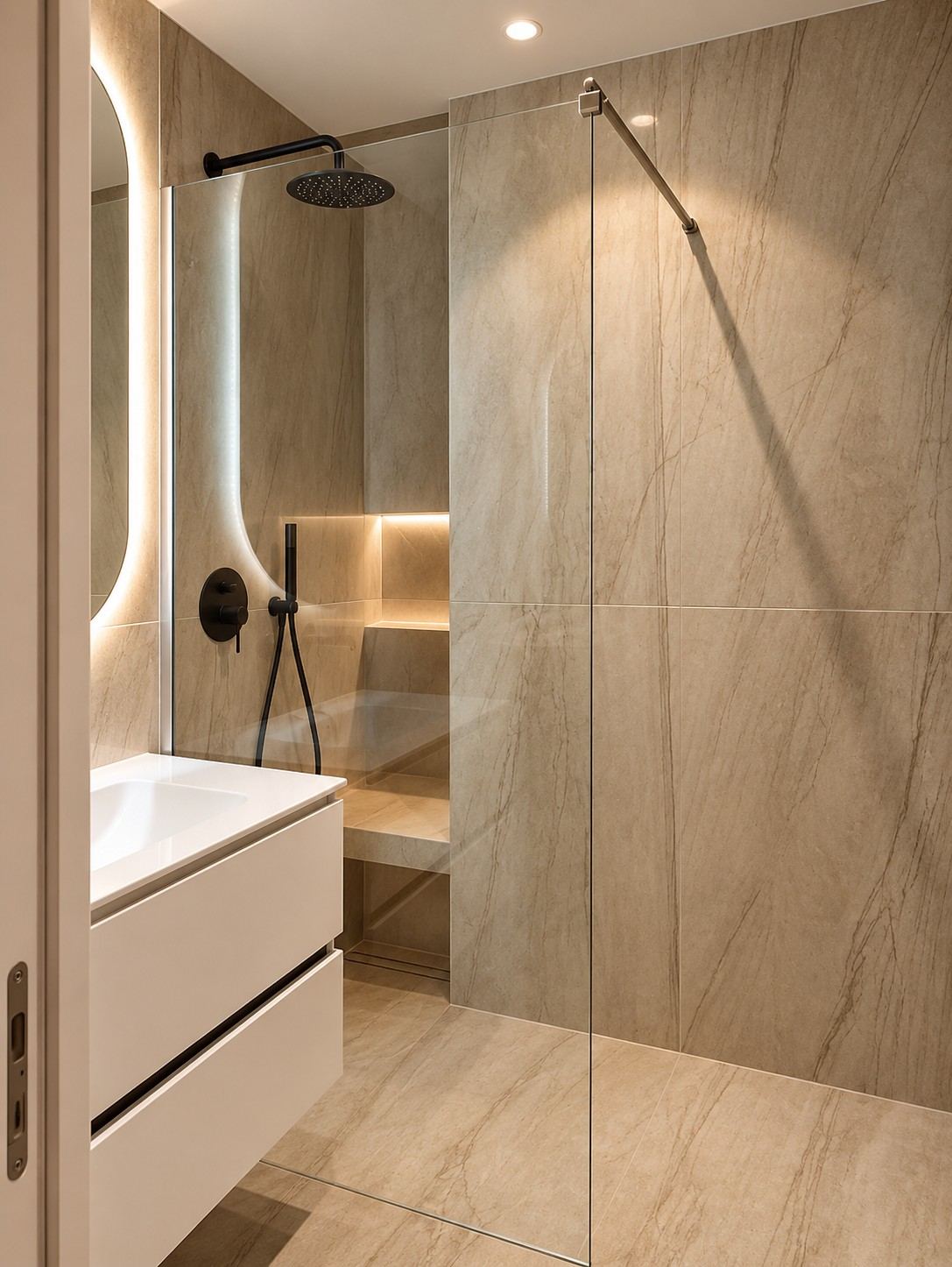
Earthing and wet rooms. Earth electrode measured, equipotential bonding in the bathroom, fittings chosen according to the zones around the bath and the shower. This is what the NF C 15-100 standard requires.
The circuits. Dedicated circuits in the kitchen, sockets laid out room by room, ICTA conduits chased in before plastering. When the installation is fully rewired, we put together the certificate of conformity (Consuel) where it is required to have the power reconnected.
Plumbing: drains, supply, hot water
The drains. They govern the layout: a steady fall to the stack or the collector, consistent diameters, accessible traps. Moving a shower or a WC is possible as long as that fall holds: it is the first thing checked at the survey.
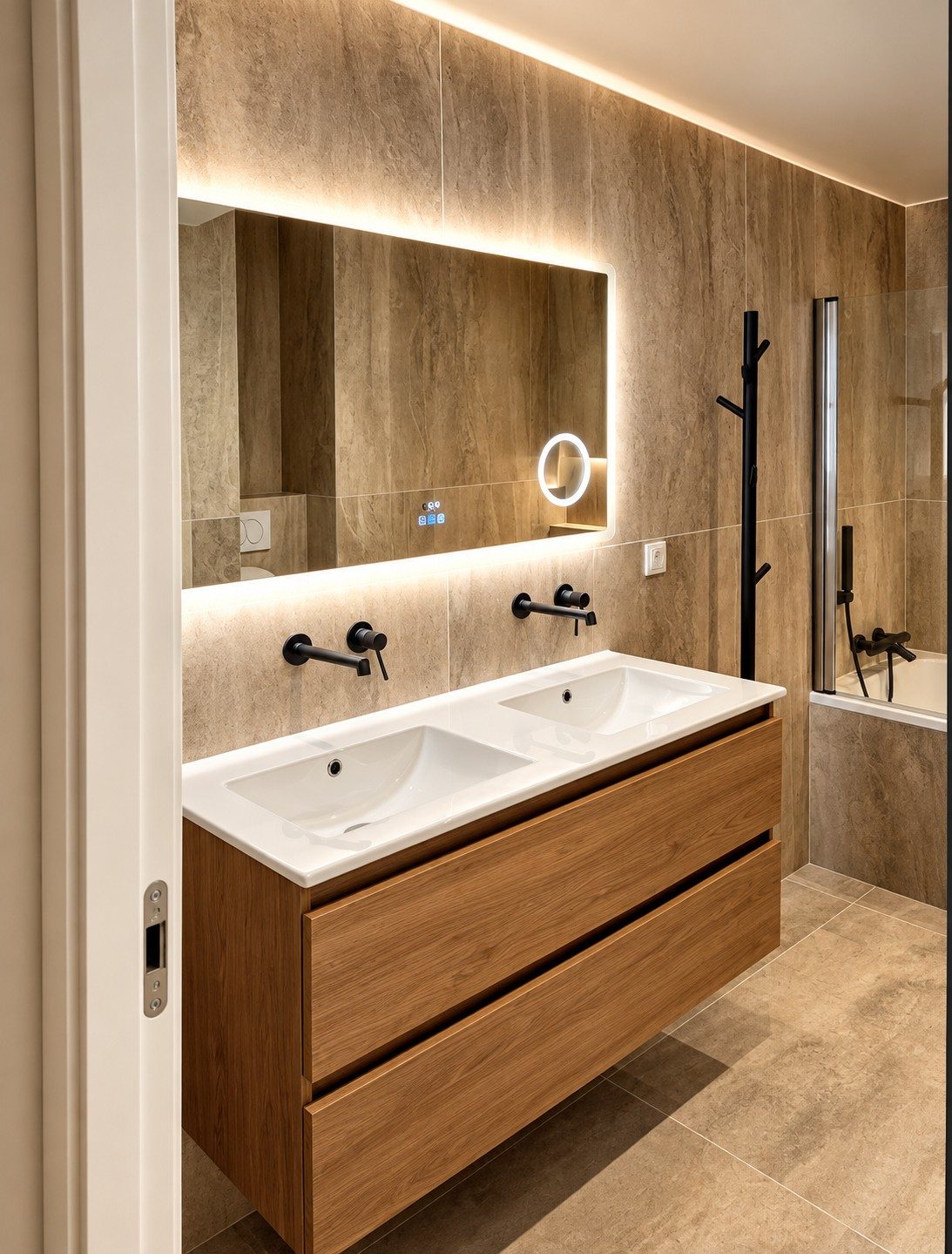
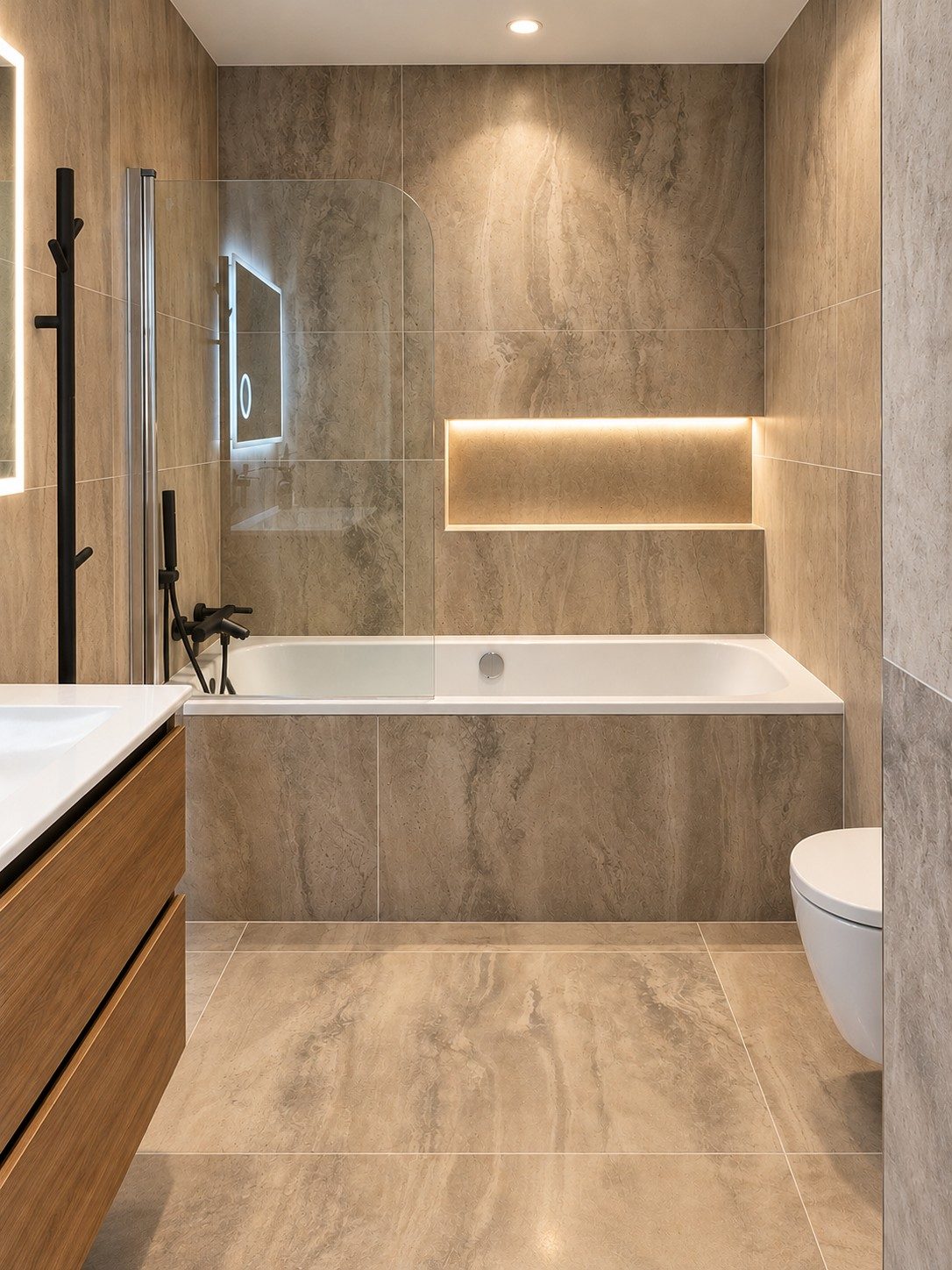
The supply. New distribution in multilayer or PER pipe, sleeved and labelled. Accessible stop valves, a manifold where the home allows it, concealed brassware fixed on supports set before the tiling.
Hot water. Cylinder or instantaneous heater connected in the right place, safety group drained, dedicated supply. Before closing up, the whole network is pressure-tested and checked: a leak is corrected then, never after the tiles.
As part of a project, never as a call-out
We do not replace a broken water heater and we do not chase a leak on a Sunday evening. What we do is renew the services of a room or a home while it is being renovated, in the order that protects the finishes: strip-out, services, tests, closing up, floors and walls, fittings.
During a partial renovation, water and power in the rest of the home stay on; interruptions are announced the day before and kept to the day. The quotation, sent within 48 working hours of the visit, sets out the items concerned, the materials and the schedule. The other trades are described on our pages bathroom, kitchen renovation, apartment renovation and full renovation.
HEXABAT — Construction & Rénovation, Nice